
Indoor–Outdoor Kitchens That Truly Flow: Designing for Function, Lifestyle & Seamless Living
The line between indoor kitchens and outdoor kitchens is becoming more intentional in today’s homes. Rather than treating them as separate areas, homeowners are designing spaces that feel connected, where cooking, gathering, and entertaining can move naturally between indoors and out.
The New Standard: One Continuous Experience
Achieving this requires more than simply adding a grill to a patio. It’s about continuity in materials, thoughtful planning of workflow, and attention to how the space will actually be used. When done well, the outdoor kitchen doesn’t feel like an afterthought, it feels like a natural extension of the home’s overall experience.
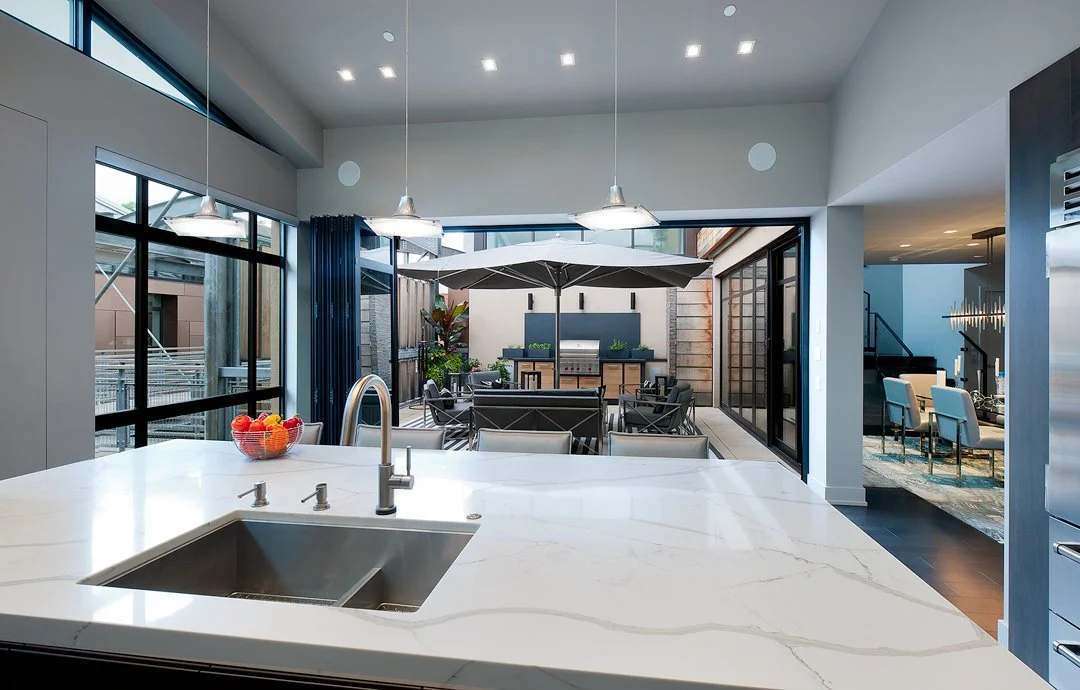
Creating Rhythm & Cohesion Between Two Spaces
A successful indoor–outdoor kitchen starts with design continuity.
This doesn’t mean duplicating everything, it means carrying over key elements:
Material palettes (stone, wood tones, finishes)
Architectural details that reflect the home’s style
A consistent level of formality or casualness
Sightlines that visually connect the spaces
Whether the transition is through large glass doors, a window pass-through, or a walk across a patio, the goal is the same: It should feel like one intentional environment.
Workflow First
One of the biggest misconceptions in outdoor kitchen design is treating it like a checklist of appliances.
Instead, the focus should be on workflow and workspace.
Just like an indoor kitchen, an outdoor kitchen should answer:
Where does prep happen?
Where is the cooking zone?
Where does serving or entertaining flow?
But outdoors, the balance shifts:
Workspace becomes more important than storage
Prep areas (especially for grilling or pizza) need to be intentional
Movement between zones needs to feel effortless
A well-designed outdoor kitchen isn’t about how much you can fit, it’s about how well it functions
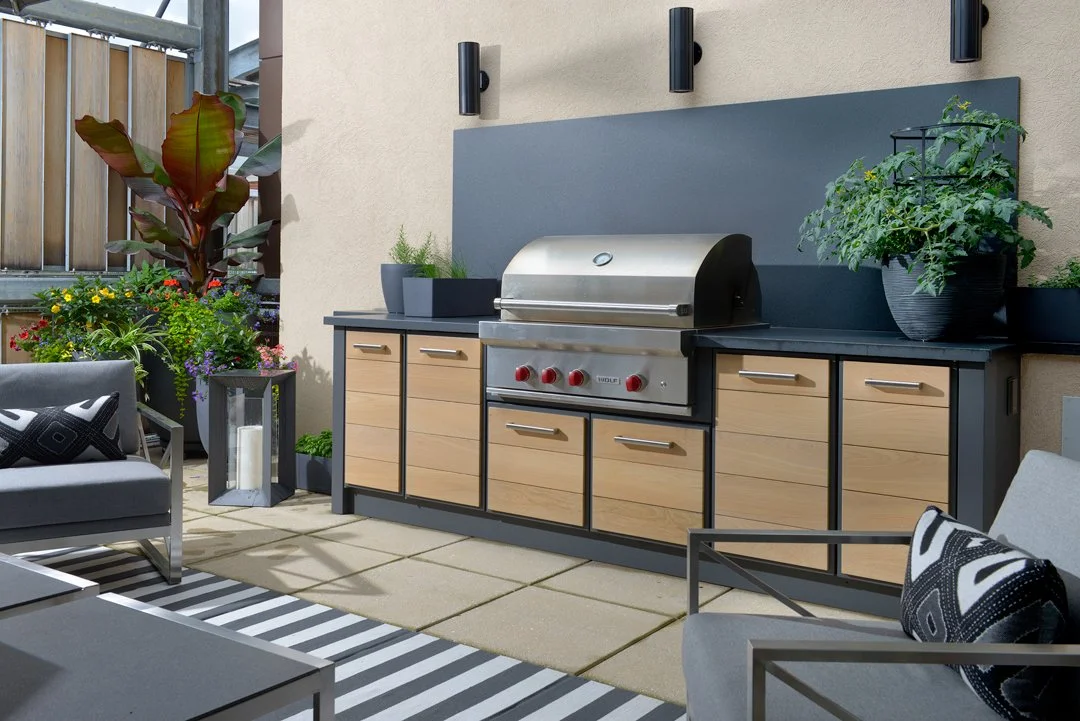
Designing for How you Live
Every outdoor kitchen should reflect how the homeowner will use the space.
Some questions KBC prioritizes:
Are you a casual griller or an entertainer hosting full meals?
Do you need spice storage, utensils, and linens outdoors?
Are you using specialty equipment like pizza ovens or power burners?
For example:
A pizza oven requires dedicated prep space, storage for tools (like peels), and thoughtful counter placement
A grill-focused setup may prioritize simplicity and open workspace
Entertainers may want full functionality outdoors, including storage, refrigeration, and serving zones
The design should be built around lifestyle, not trends.
Custom Cabinetry: The Core of a Functional Outdoor Kitchen
At KBC, custom cabinetry is the foundation of both indoor and outdoor kitchen design.
This is where the space becomes truly functional.
Custom casework allows for:
Integrated storage for tools, utensils, and specialty items
Dedicated zones for prep (like pizza or grilling)
Built-in solutions like pull-out trash and concealed storage
Seamless appliance integration
Unlike off-the-shelf outdoor cabinetry, custom solutions ensure:
Proper durability for outdoor conditions
A tailored fit for the space
A cohesive design that mirrors the interior kitchen
This is where design meets real-life functionality.
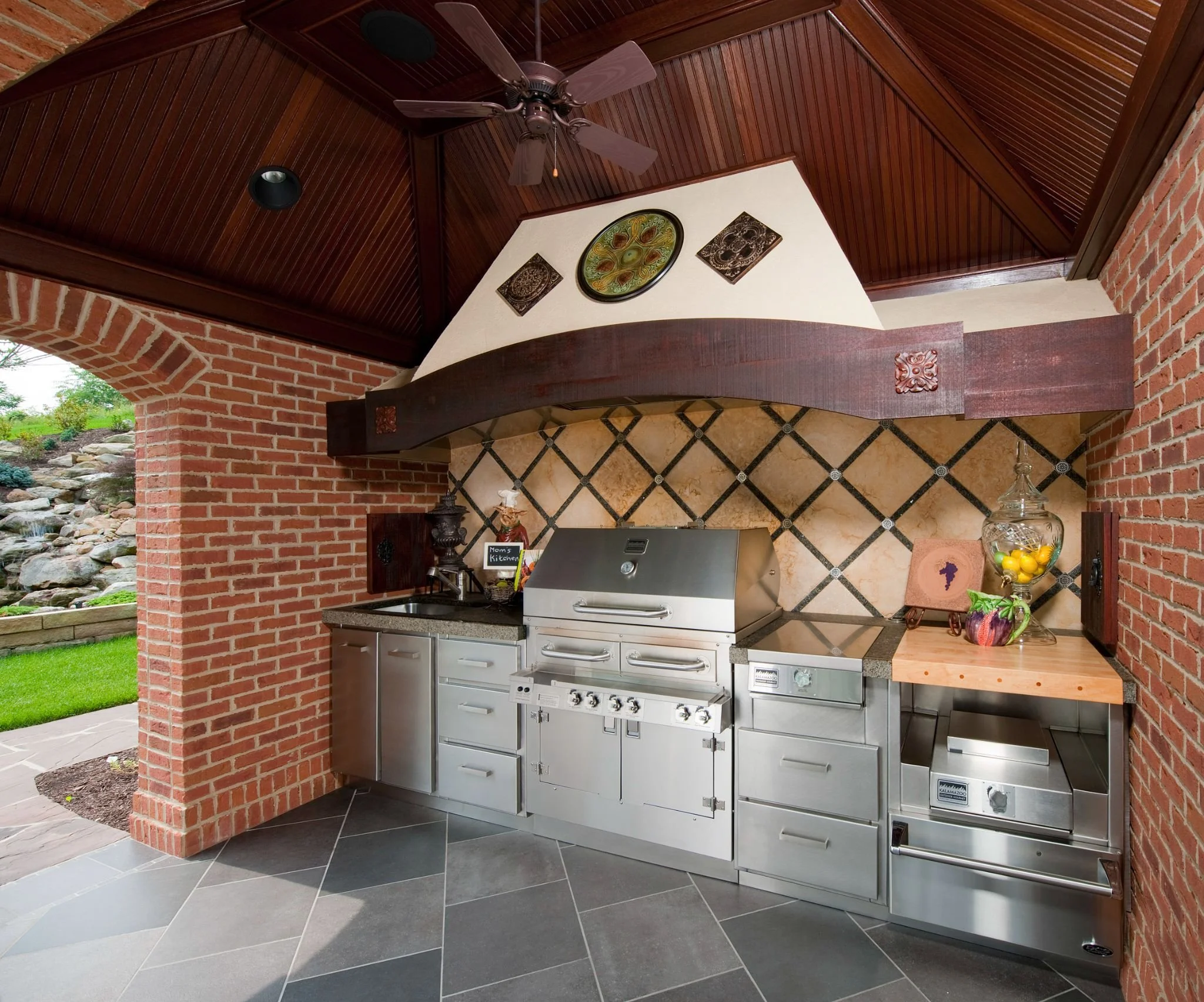
Appliances & Function: Designing Around What You’ll Use
Outdoor kitchens today can include a wide range of features:
Grills (standard or high-performance)
Power burners (great for lobster boils or large-scale cooking)
Pizza ovens (gas, wood-burning, or hybrid)
Under-counter refrigeration
Sinks and plumbing
But more isn’t always better.
One of the most common mistakes homeowners make is: Trying to fit too much into too little space
Instead, KBC focuses on:
Establishing a hierarchy of importance
Designing within the realistic constraints of the space
Ensuring every element has room to function properly
Materials That Last in Pittsburgh’s Climate
Outdoor kitchens in Pittsburgh require thoughtful material selection.
Top-performing options include:
Stainless steel cabinetry (durable and weather-resistant)
Powder-coated or hydrodipped finishes for added protection
Dekton countertops (extremely durable and heat-resistant)
Natural stone, used strategically
Important considerations:
Direct sunlight and heat exposure
Moisture and seasonal changes
Long-term durability vs. maintenance
The goal is to balance beauty with performance.
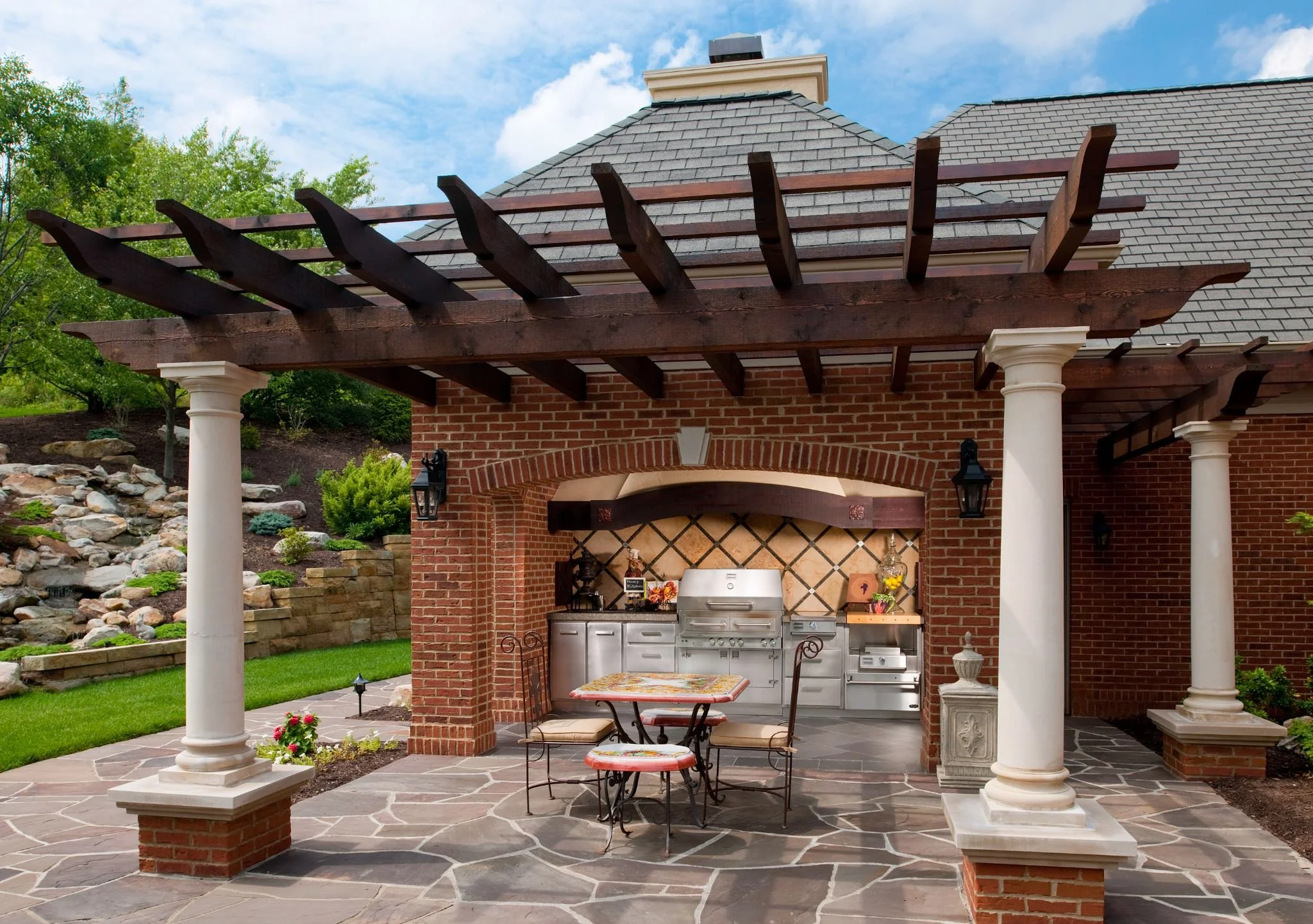
Maintenance & Winterization: Planning Ahead
Outdoor kitchens don’t just need to look good, they need to function year-round (or be properly protected).
Key considerations:
Plumbing systems must be winterized to prevent freezing
Under-counter appliances may need to be removed or protected
Materials and finishes should be chosen with seasonal wear in mind
Pittsburgh’s climate adds an extra layer of responsibility: Maintenance isn’t optional, it’s part of the design strategy.
The Biggest Mistake: Overdesigning the Space
One of the most common pitfalls is trying to recreate a full indoor kitchen outdoors, without the space to support it.
This leads to:
Cramped layouts
Poor workflow
Underutilized features
Instead, the focus should be:
What do you actually need?
How will you use the space most often?
What will make this feel effortless—not overwhelming?
What Makes an Indoor–Outdoor Kitchen Truly Successful
The most impactful designs share one thing: They feel intentional.
When done right:
The transition between spaces is seamless
The functionality supports real life
The outdoor space feels just as comfortable as the indoor kitchen
The design reflects the architecture and lifestyle of the home
You’re not stepping outside into a different experience, you’re simply continuing it.
Designing Beyond the Expected with KBC
At Kitchen & Bath Concepts, indoor–outdoor kitchens are designed with the same intention, precision, and personalization as every interior space.
From custom cabinetry and workflow planning to material selection and long-term performance, the team approaches each project with a deep understanding of how the space will actually be used—ensuring it not only looks cohesive, but functions effortlessly.
Because the most successful indoor–outdoor kitchens aren’t defined by how much they include, but by how seamlessly they work.
When thoughtfully designed, these spaces don’t feel like an addition to the home, they feel like they’ve always been part of it.
Book a design consultation today to see how your indoor/outdoor kitchen can flow.