
AD Feature: Timeless Kitchen Design: Blending Old-World Character with Modern Function
A truly timeless kitchen doesn't have to choose between character and convenience.
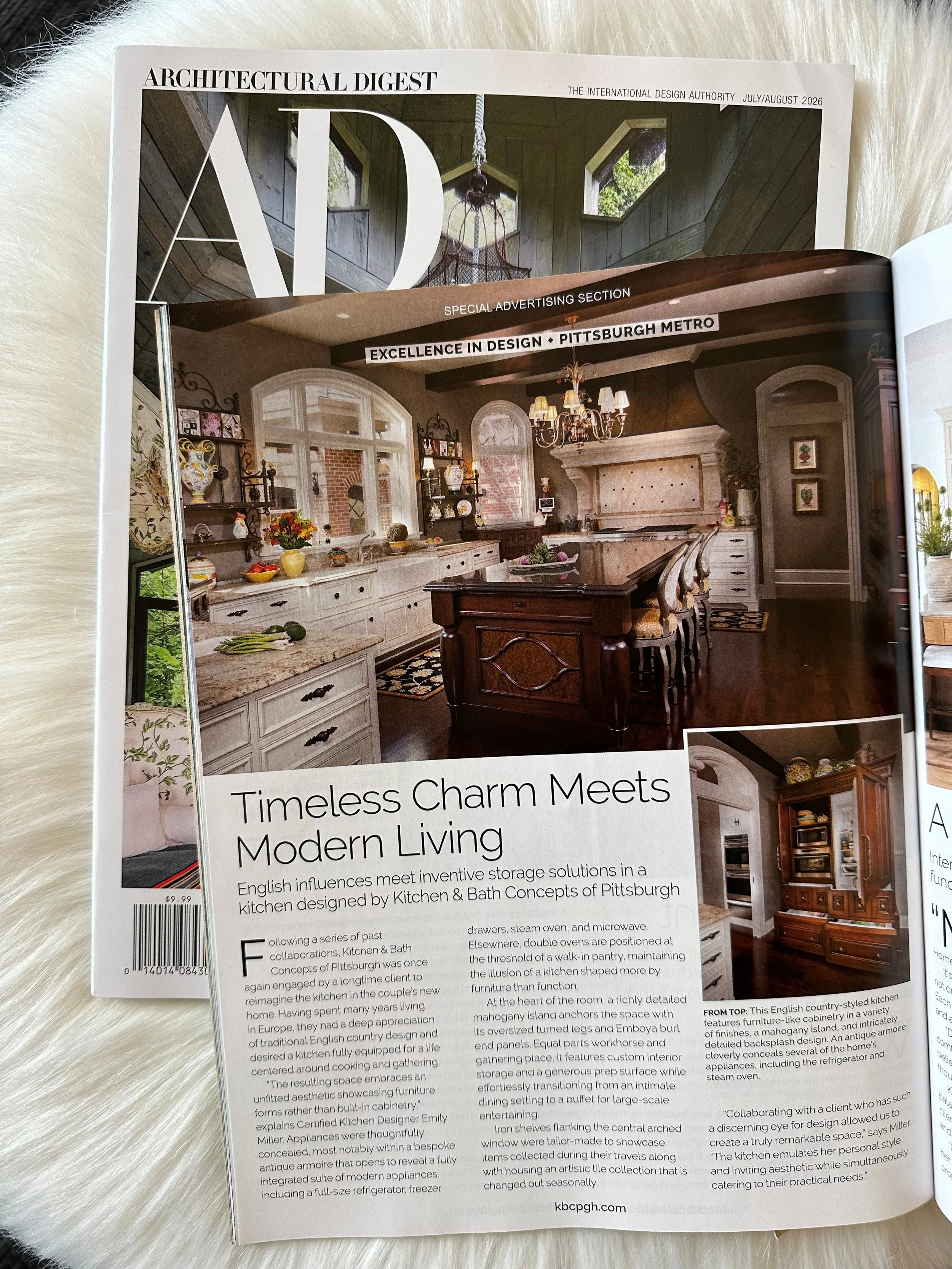
In a recent Kitchen & Bath Concepts project featured in Architectural Digest, the KBC team reimagined the kitchen of a longtime client's new home, creating a space deeply influenced by traditional English country design while incorporating the functionality expected from a modern luxury kitchen.
After spending many years living in Europe, the homeowners had developed a deep appreciation for the warmth, craftsmanship and layered character of traditional English country interiors. When it came time to design their new kitchen, the goal wasn't to replicate a period kitchen. Instead, KBC translated those influences into a highly personalized space designed around the way the homeowners cook, entertain and live today.
The result is a kitchen that feels established rather than newly installed—while quietly concealing an extraordinary amount of modern functionality.
Designing a Kitchen That Belongs to the Home
Timeless design begins with context.
Rather than approaching a renovation as an isolated room, KBC considers the architecture of the home, the client's personal aesthetic and the relationship between the kitchen and surrounding spaces.
For this project, traditional English influences provided the foundation. Furniture-like cabinetry, warm wood tones, architectural detailing and carefully considered materials give the room the richness and permanence associated with classic European interiors.
The intention wasn't to make the kitchen feel old. It was to make it feel as though it had always belonged there.
That distinction is important.
A successful traditional kitchen doesn't rely on adding decorative details simply for the sake of decoration. Scale, proportion, materials and architectural elements all need to work together to create authenticity.
Custom Cabinetry That Feels Like Furniture
One of the defining elements of the kitchen is its cabinetry.
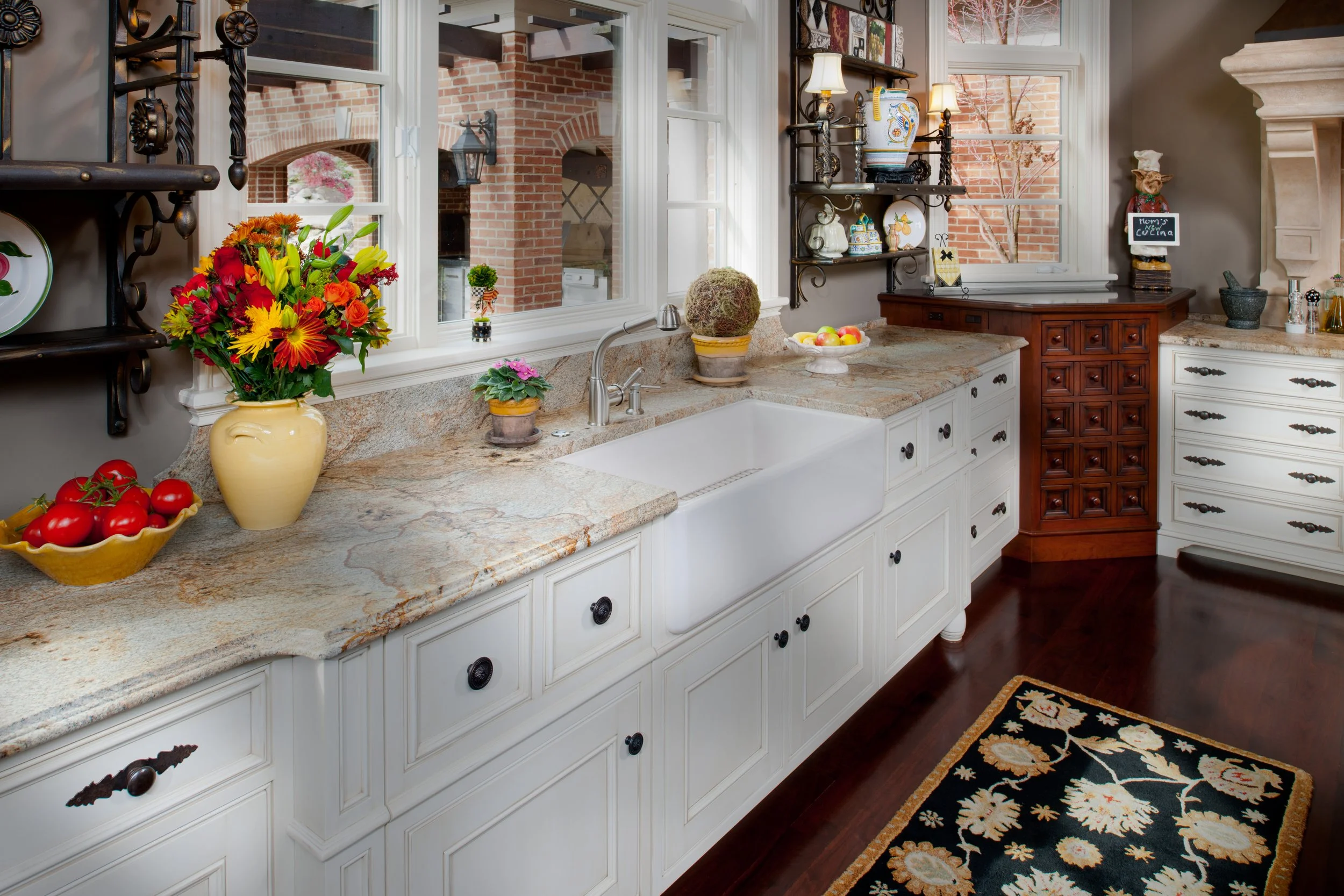
Rather than reading as a continuous wall of standard kitchen cabinets, the cabinetry incorporates furniture-like forms that help create the collected character associated with traditional English interiors.
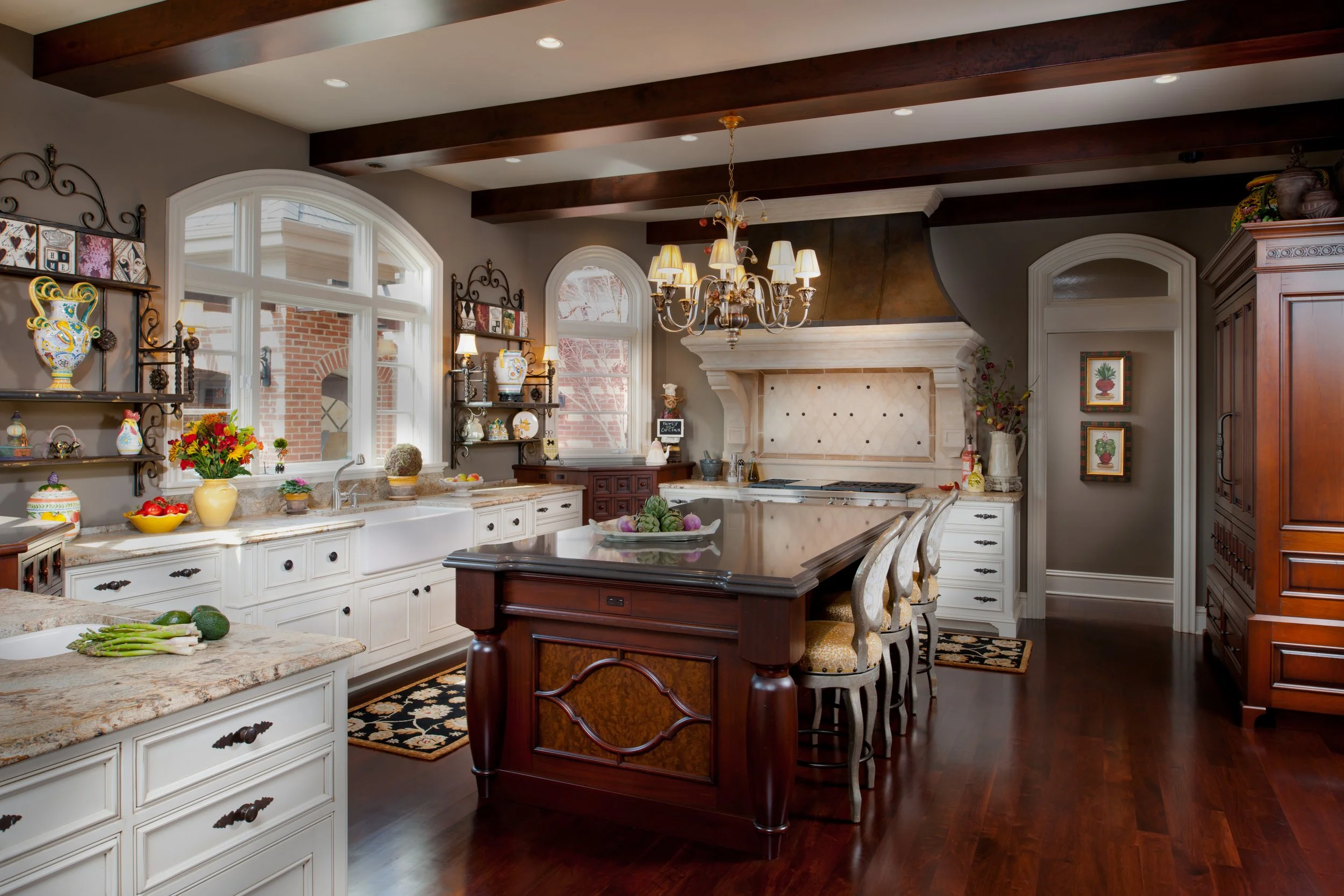
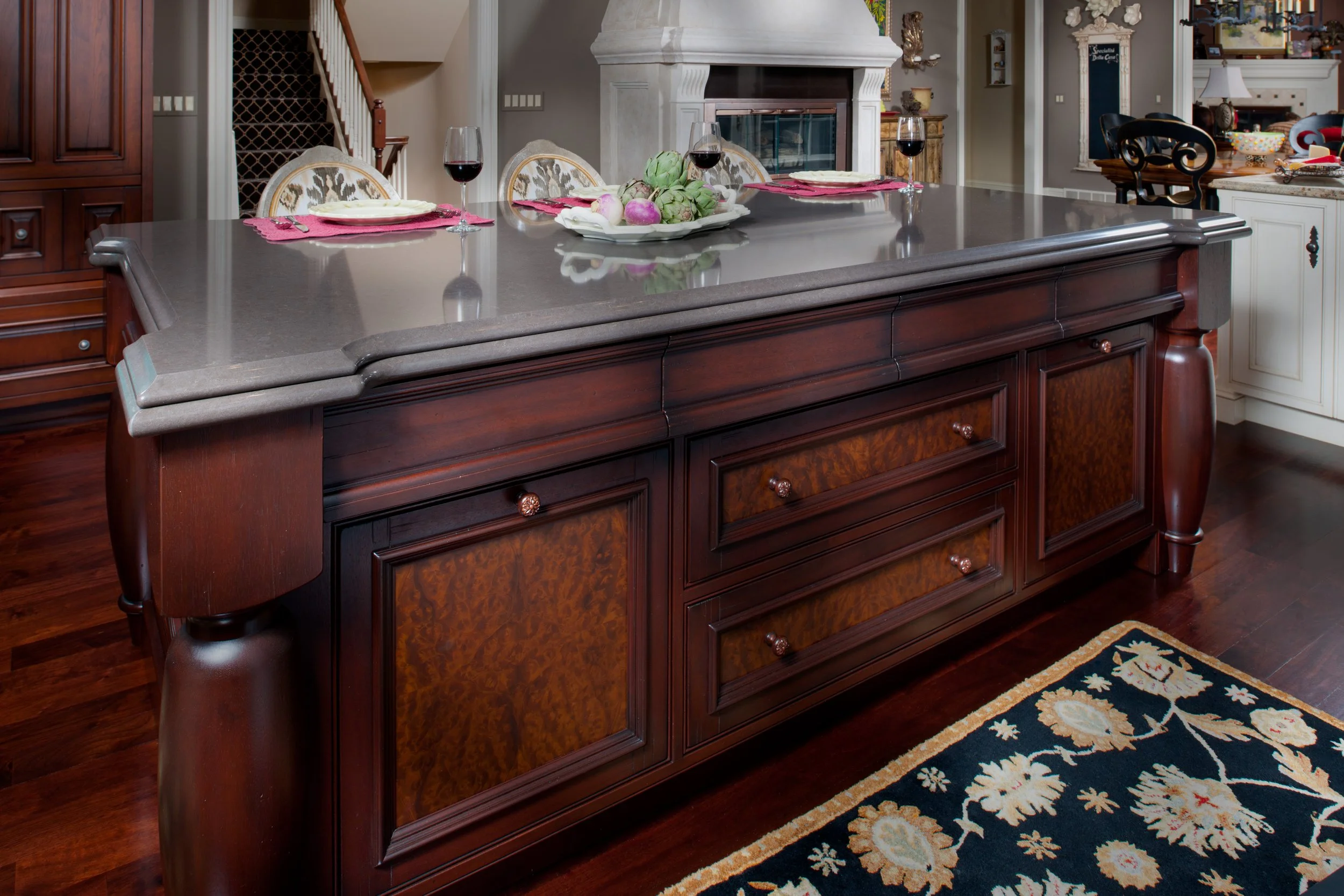
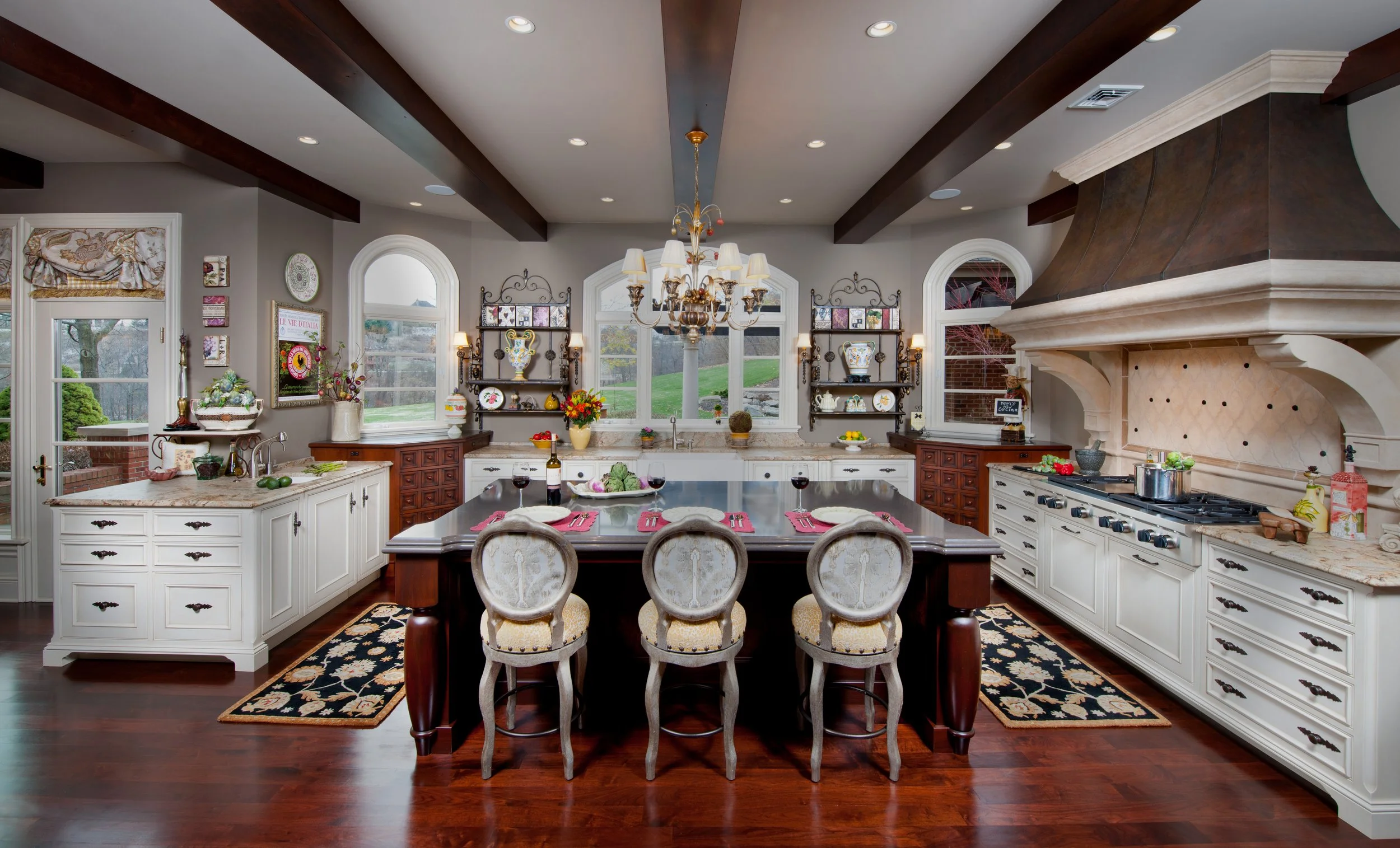
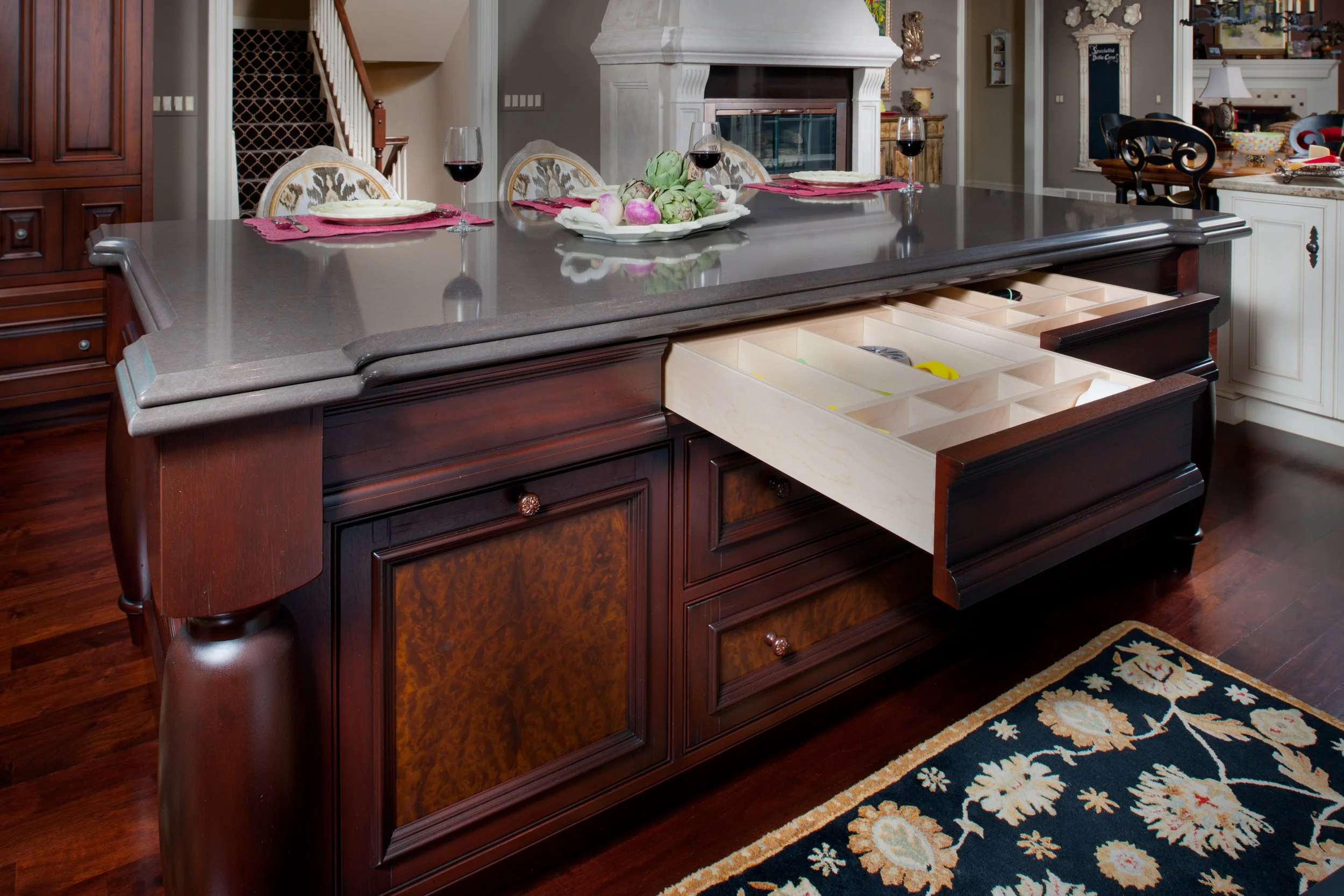
The richly detailed mahogany island serves as the visual heart of the room. Its oversized turned legs and Emboya burl end panels give it the presence of a substantial piece of furniture rather than a conventional kitchen island.
But beauty is only half of its purpose.
The island also provides generous prep space and custom interior storage, allowing it to function as a true workhorse for everyday cooking while becoming a natural gathering point when the homeowners entertain.
That balance—creating something visually exceptional without sacrificing functionality—is central to KBC's approach to custom design.
Concealing Modern Appliances Within Traditional Design
Some of the most sophisticated details in this kitchen are the ones you barely notice.
Modern kitchens require substantial appliances, but a wall of stainless steel would have interrupted the traditional aesthetic the homeowners wanted to preserve.
The solution was integration.
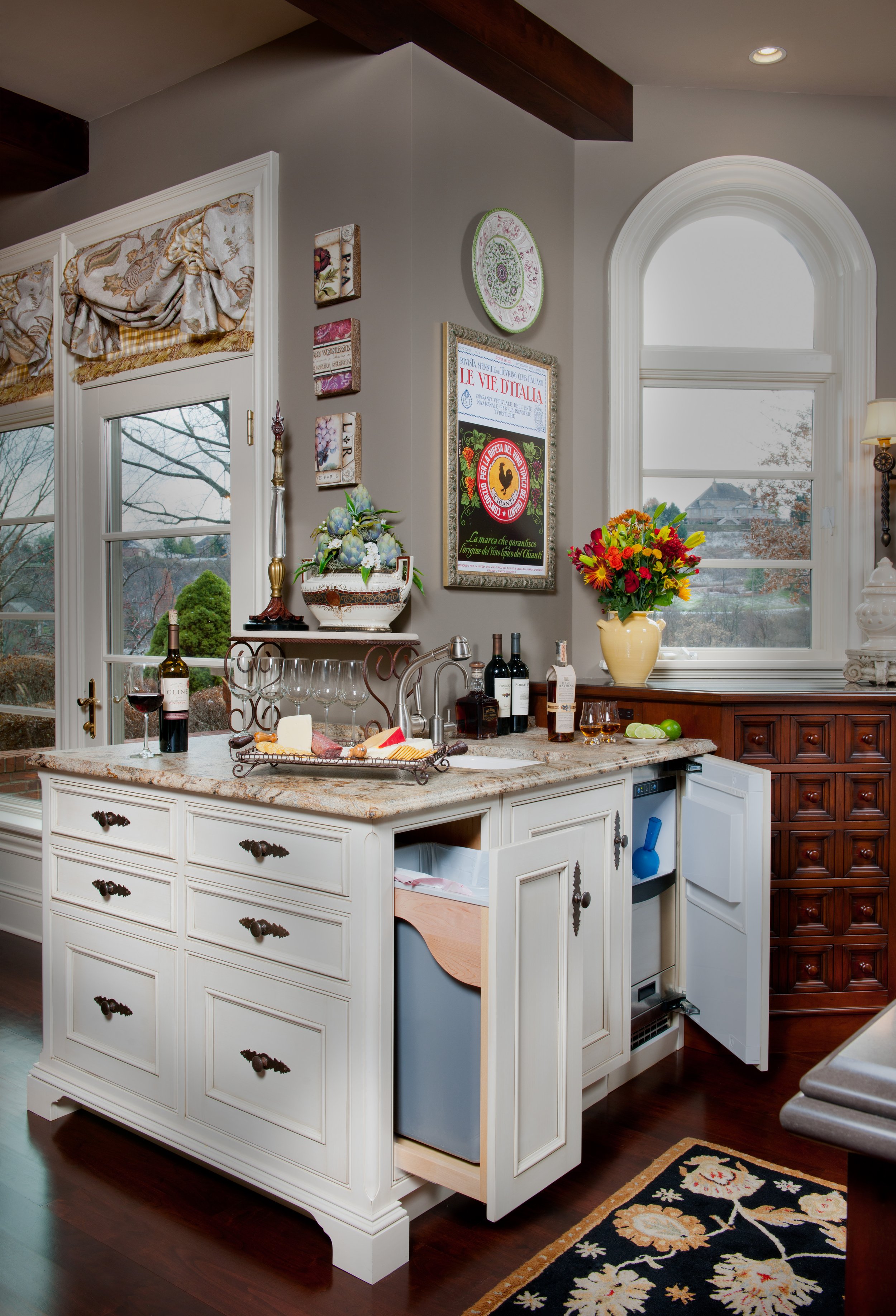
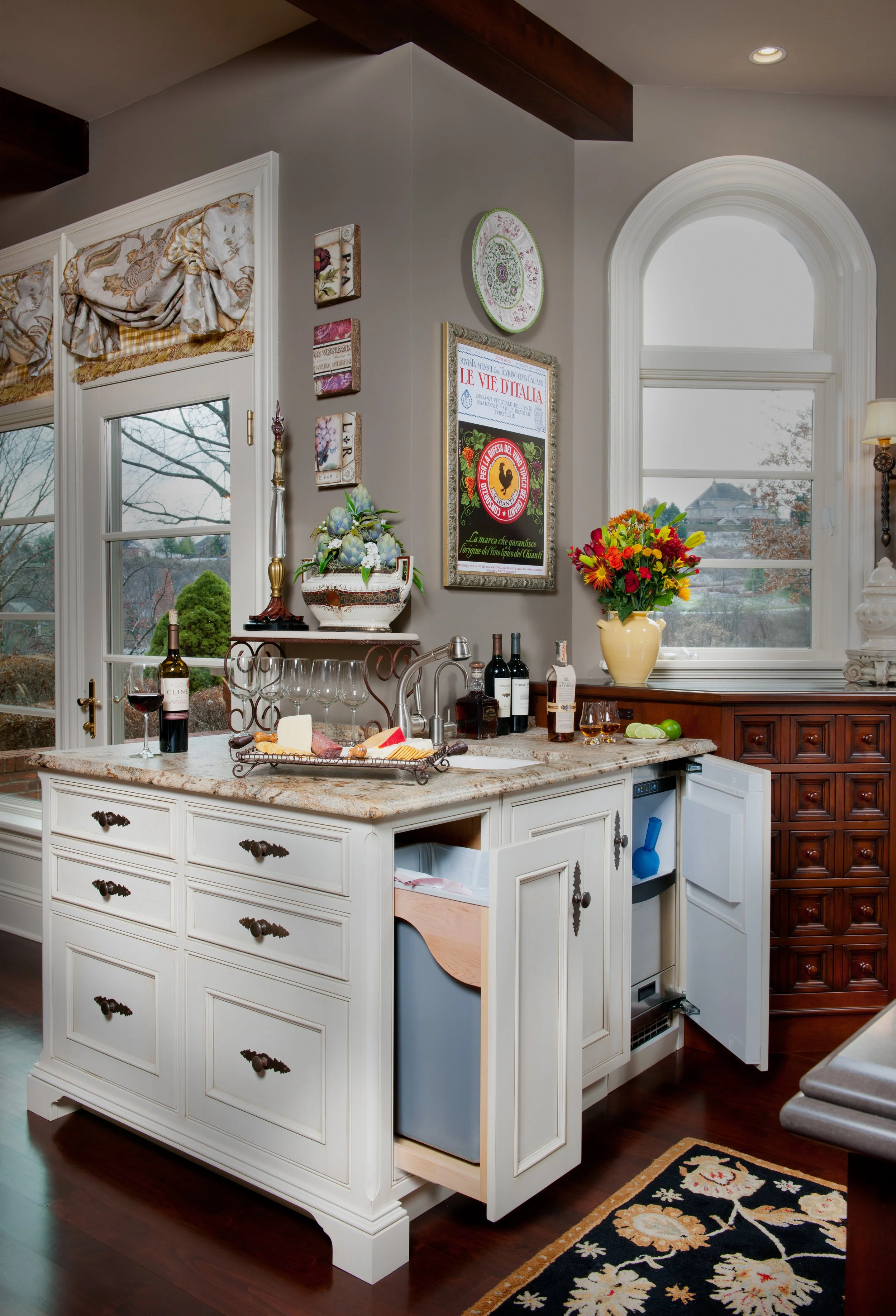
Appliances were thoughtfully concealed within custom cabinetry, including an armoire-inspired cabinet that opens to reveal a fully integrated suite of modern appliances.
A full-size refrigerator, freezer drawers, steam oven and microwave are incorporated into the cabinetry rather than becoming dominant visual elements within the room.
Elsewhere, double ovens are positioned at the entrance to the walk-in pantry.
The homeowners have all the functionality of a thoroughly modern kitchen, but technology doesn't dictate the aesthetic.
Instead, the appliances become part of the architecture.
Storage Designed Around the Homeowner
Custom cabinetry also allows storage to move beyond the standard combination of drawers, shelves and upper cabinets.
Every homeowner cooks differently.
Every homeowner entertains differently.
And every homeowner owns different things.
This kitchen was designed around those realities.
Rather than asking the homeowners to adapt their belongings and routines to standardized cabinetry, KBC was able to design storage around their specific needs—from everyday kitchen essentials to serving pieces and specialty items.
That level of customization helps maintain the room's refined appearance while ensuring that everything has a purposeful place behind the scenes.
It is one of the reasons custom cabinetry can have such an impact on how a kitchen actually feels to use: functionality becomes almost invisible.
A Kitchen Designed for Entertaining
For these homeowners, entertaining was an important consideration from the beginning.
The kitchen needed to function beautifully during everyday life but also transition effortlessly when hosting larger gatherings.
The expansive island provides a generous surface for preparation while creating an intimate place for people to gather.
A nearby buffet provides another dedicated surface for serving during larger events, allowing food, guests and kitchen activity to move naturally through the room rather than competing for the same space.
This type of planning is about much more than making a kitchen larger.
It's about understanding movement.
Where will the cook work?
Where will guests naturally gather?
Where will food be served?
Which areas need to remain accessible when the kitchen is full?
Answering those questions early allows the final space to feel intuitive—whether two people are having breakfast or the homeowners are hosting a house full of guests.
Letting Personal Collections Become Part of the Design
A custom home should make room for the things that tell the homeowners' story.
In this kitchen, iron shelving positioned around the central arched window creates an opportunity to display items collected during the homeowners' travels.
Instead of treating those pieces as accessories added after the project was complete, the architecture gives them an intentional place within the design.
It's another reason the kitchen feels personal rather than staged.
The room isn't simply a representation of English country style. It's an interpretation of that aesthetic through the homeowners' experiences, travels and personal collections.
Those layers are what give a space character that can't be recreated by following a trend or selecting a kitchen directly from a catalog.
The Details That Create Authenticity
Some of the most impactful design decisions aren't immediately obvious.
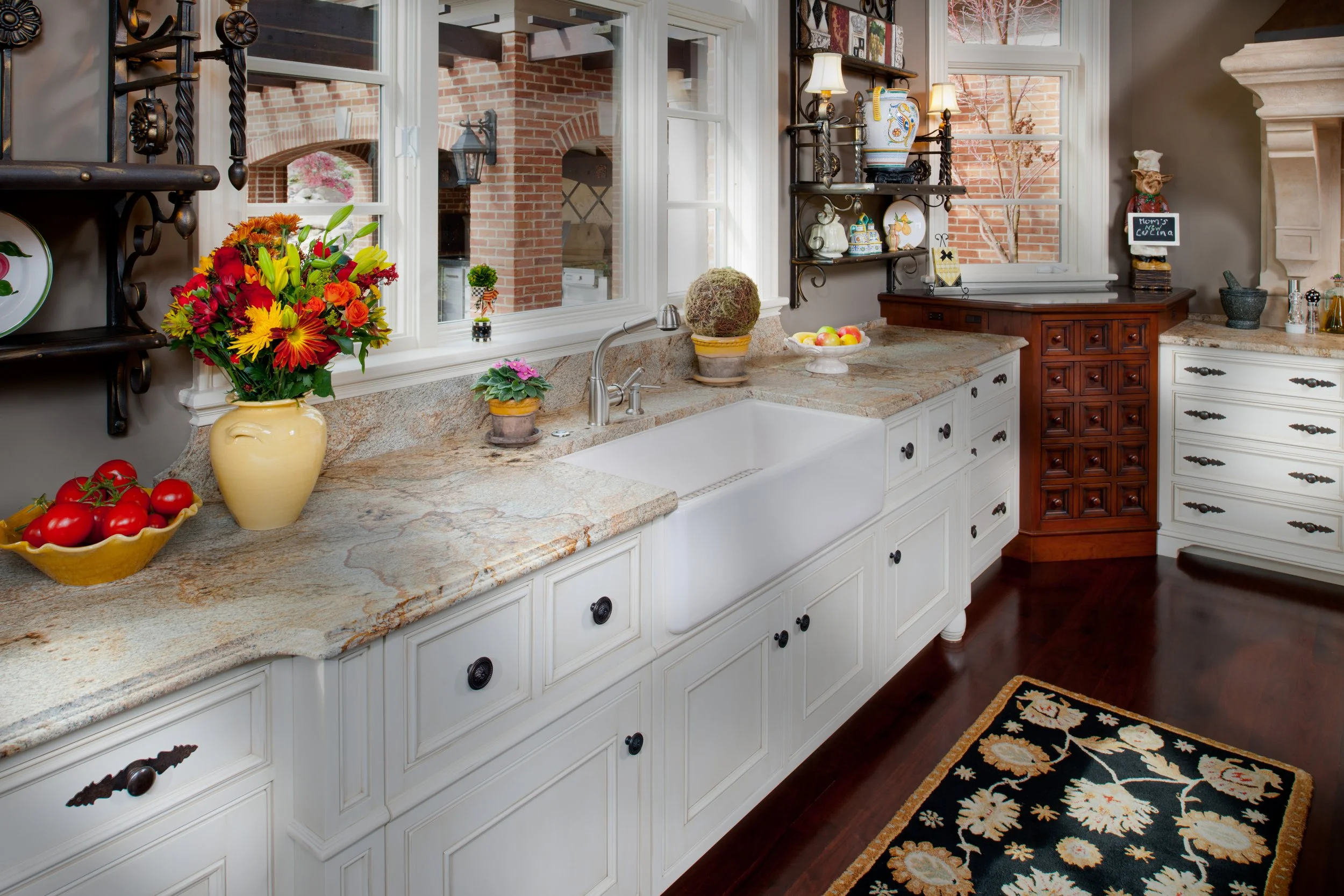
The custom cabinetry
The arched forms
The iron shelving
The richly detailed island
The relationship between the warm woods and lighter cabinetry
The positioning of appliances
The backsplash
The transition between preparation, storage and entertaining areas
Individually, each detail contributes something different.
Together, they establish the rhythm of the room.
This is where thoughtful kitchen design extends beyond selecting cabinetry, countertops and hardware. Each decision needs to relate to the next so the finished room feels cohesive rather than assembled.
Traditional Doesn't Have to Mean Outdated
There's an important distinction between designing a traditional kitchen and recreating a kitchen from another era.
Today's homeowners can embrace historic influences, detailed millwork, natural materials and furniture-inspired cabinetry without sacrificing modern performance.
In fact, the contrast can make both elements stronger.
Traditional detailing provides warmth and permanence, while thoughtfully integrated appliances, customized storage and carefully planned workflow allow the kitchen to function for contemporary life.
The result isn't purely traditional or modern.
It's personal.
And that is ultimately what makes the design timeless.
Creating a Kitchen That Is Uniquely Yours
As KBC Certified Kitchen Designer Emily Miller shared in Architectural Digest, collaborating with a client who has such a discerning eye for design allowed the team to create a truly remarkable space.
That collaboration is an essential part of the KBC design process.
The goal isn't to impose a particular KBC aesthetic onto every project. It's to understand the homeowner, the architecture and the way the space needs to function—and then use thoughtful design, technical expertise and custom capabilities to bring those elements together.
This kitchen may draw inspiration from English country design, but its real success lies in how specifically it was created for the people who live there.
It is traditional without sacrificing innovation, elegant without sacrificing comfort, and highly functional without looking utilitarian.
Most importantly, it feels like home.
Start Your Design Journey with KBC
A truly custom kitchen begins long before cabinetry is selected. It begins with understanding how you live, what inspires you and what you want your home to become.
Visit the Kitchen & Bath Concepts showroom to explore full-scale kitchen environments, custom cabinetry, architectural details and design possibilities firsthand. Bring your plans, your inspiration or simply your ideas, and let the KBC team help you imagine what could be possible in your own home.
Your home doesn't need to follow a particular style. It needs a design that feels unmistakably yours. Book a design call today.